Electric vs Petrol: What’s Best for You in India?
Confused between electric and petrol cars? Compare cost, range, maintenance, and driving experience to decide the best option for Indian road and usage conditions.
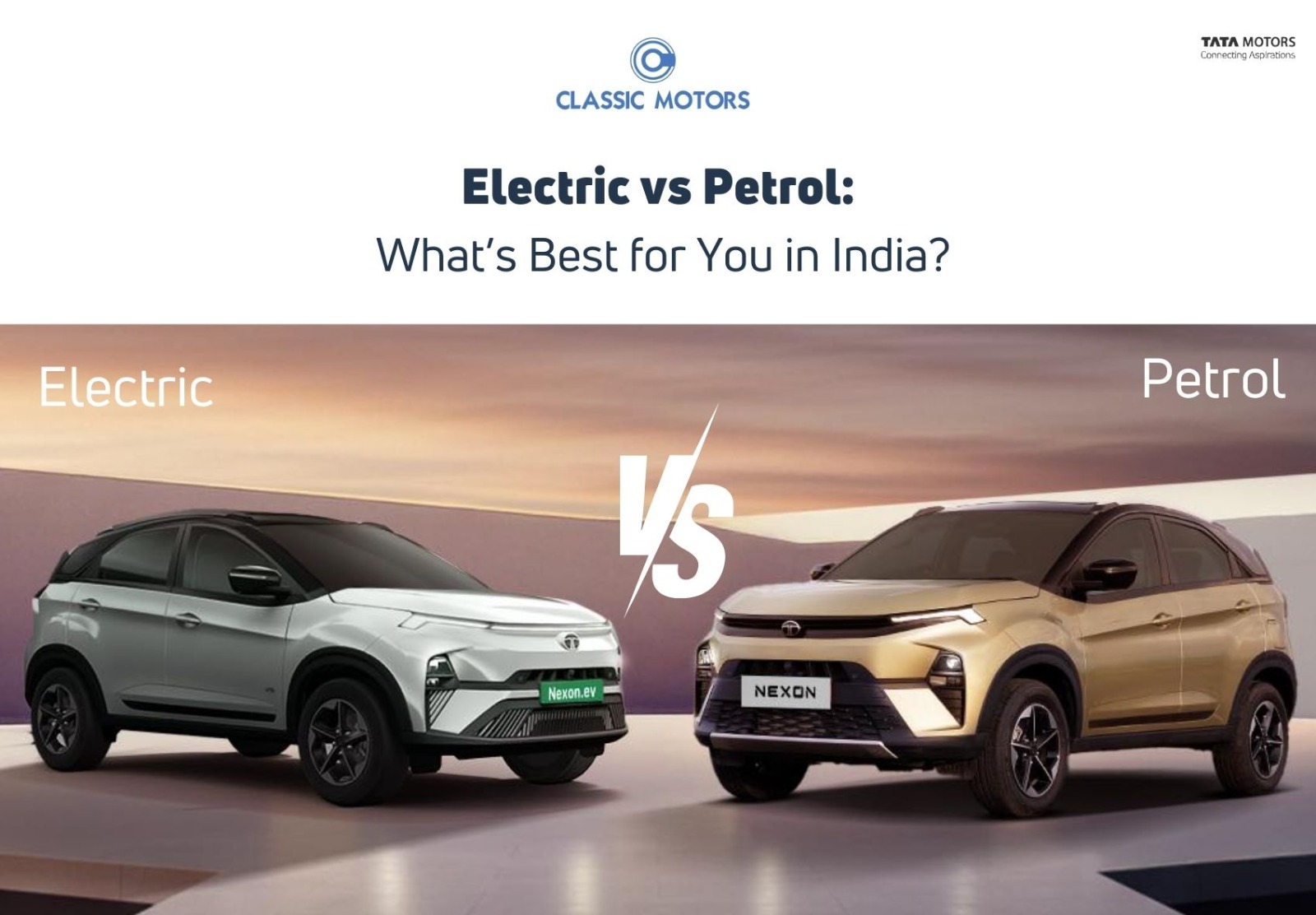
The Indian car market today offers both petrol and electric options across segments. Buyers now have access to hatchbacks, compact SUVs, and midsize SUVs in both powertrain formats. The decision depends on usage pattern, driving distance, charging access, and budget. We explain the key differences using current TATA models as examples.
Understanding Electric Cars in India
Electric vehicles run on battery power and use an electric motor instead of an internal combustion engine. TATA Motors currently offers multiple EVs, including the TATA Tiago EV, TATA Punch EV, and TATA Nexon EV.
The TATA Tiago EV is available with two battery options. The Medium Range version uses a 19.2 kWh battery with a claimed range of 257 km. The Long Range version uses a 24 kWh battery with a claimed range of 315 km. Charging options include a regular 15A home socket, a 7.2 kW AC home charger, and DC fast charging.
The TATA Punch EV offers two battery choices as well, with claimed ranges of 315 km and 421 km depending on the variant. It is built on TATA ev architecture, designed specifically for electric vehicles.
The TATA Nexon EV Long Range version uses a 40.5 kWh battery and has a claimed range of 465 km under ARAI testing. It also offers features such as regenerative braking levels and drive modes.
When reviewing TATA EV range, buyers should note that real-world driving range may vary depending on traffic, driving style, and climate conditions.
Petrol Cars: Proven and Widely Available
Petrol vehicles use internal combustion engines and are supported by an extensive fuel station network across India. Refuelling takes only a few minutes, and long-distance travel does not require route planning for charging.
The TATA Nexon petrol offers a 1.2-litre turbocharged engine with manual and automatic transmission options. Larger SUVs such as the TATA Harrier petrol use a 1.5-litre turbo engine paired with manual or automatic gearboxes.
Petrol vehicles do not require charging infrastructure at home. They are often suitable for buyers who travel long distances frequently or live in areas with limited charging access.
Cost Considerations
Purchase cost is an important factor in the electric versus petrol decision.
Entry-level electric hatchbacks such as the TATA Tiago EV are positioned at accessible pricing. However, prices may vary depending on variant and battery size. Buyers should check the latest TATA EV price before making a decision.
Similarly, TATA Car Prices for petrol models vary based on engine type, transmission, and features. Electric cars generally have higher upfront costs in some segments, but they reduce fuel expenses over time due to lower running costs per kilometre.
Charging costs depend on electricity tariffs. Petrol prices fluctuate based on market conditions and taxation.
Driving Experience and Maintenance
Electric vehicles deliver instant torque and smooth acceleration. The absence of gear shifts results in linear power delivery. EVs also offer regenerative braking, which helps recover energy during deceleration.
Petrol engines produce power through combustion and require periodic servicing of components such as engine oil, filters, and spark plugs. EVs have fewer moving parts and do not require engine oil changes.
Electric vehicles operate with minimal vibration and lower cabin noise. Petrol vehicles may produce engine sound and vibration, depending on engine type and refinement.
Which One Should You Choose?
The choice depends on daily usage.
If average daily travel is under 50 km and home charging is available, an electric vehicle may meet requirements comfortably. Models such as the TATA Nexon EV and TATA Punch EV provide SUV practicality with electric efficiency.
If regular long-distance travel is required and charging access is uncertain, a petrol vehicle may offer greater convenience.
Buyers in Rajasthan can visit Classic Motors, an authorised TATA showroom in Alwar and TATA showroom in Bhiwadi, to explore both petrol and electric options. Dealerships provide updated TATA car price offers and detailed product information.
Careful review of driving needs, infrastructure access, and verified specifications will help determine the suitable powertrain for Indian conditions.