Automatic vs Manual TATA Cars – Which One Should You Choose?
Compare automatic vs manual TATA cars based on performance, fuel efficiency, and driving comfort. Find the right transmission for your driving needs.
Introduction
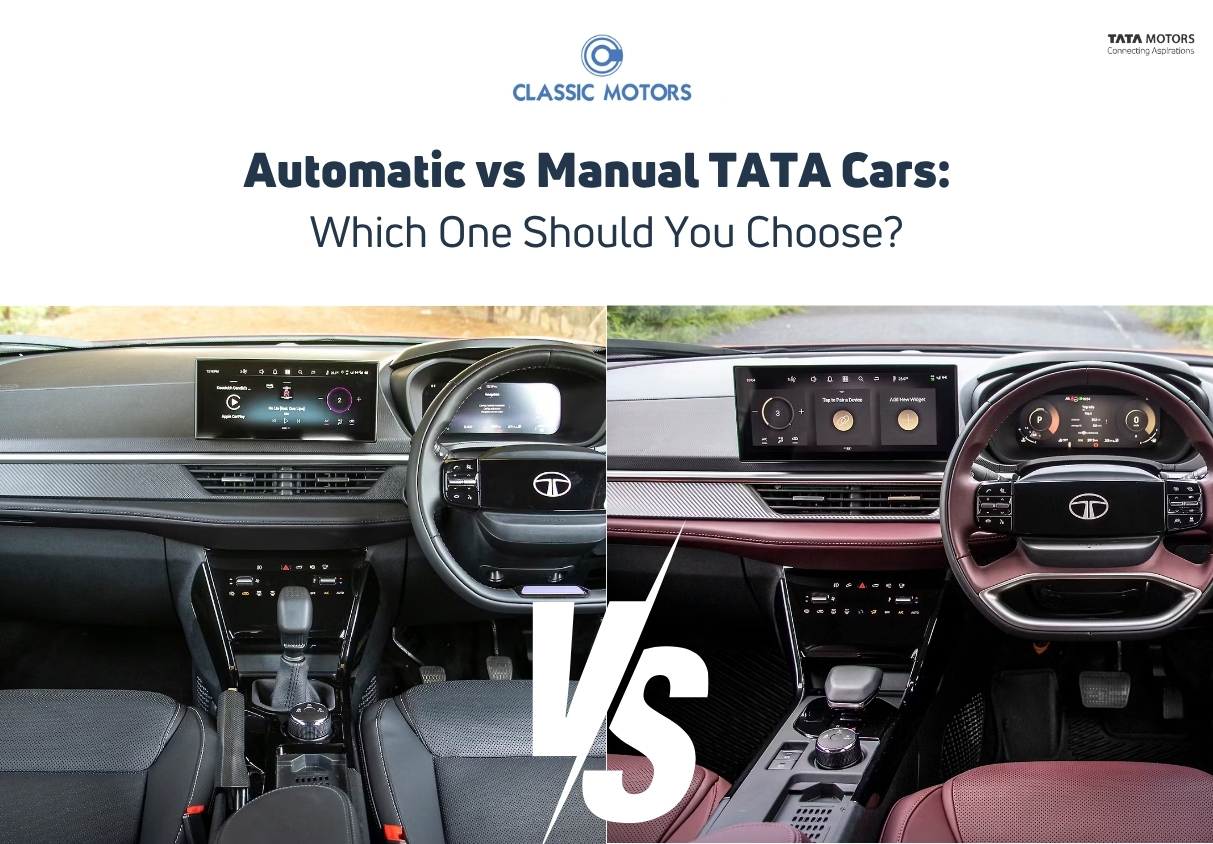
Choosing between automatic vs manual TATA cars depends on understanding how transmission systems function. TATA vehicles are available with both manual gearboxes and automatic options such as AMT and DCT. We explain the differences using a structured and factual approach.
What is Manual Transmission in TATA Cars?
Manual transmission requires the driver to operate the clutch and shift gears using a gear lever. The gearbox transfers engine power to the wheels based on driver input.
Manual systems typically have five or six gears. They are widely used across TATA models such as Tiago, Tigor, Nexon, and Punch.
What is Automatic Transmission in TATA Cars?
Automatic transmission systems change gears without manual input. TATA uses multiple automatic technologies, including Automated Manual Transmission (AMT) and Dual-Clutch Transmission (DCT).
In AMT systems, the clutch and gear shifts are controlled electronically. This reduces the need for driver intervention during gear changes.
TATA Automatic Cars vs Manual: Key Differences
Gear Operation
In manual cars, the driver controls gear shifts. In automatic cars, the system selects gears based on speed and load conditions.
Driving Effort
Manual transmission requires coordination between clutch, accelerator, and gear lever. Automatic transmission eliminates clutch usage, reducing driver effort.
Fuel Efficiency
Manual cars generally provide better fuel efficiency due to direct control over gear selection. Automatic systems may consume slightly more fuel depending on driving conditions.
Maintenance
Manual systems are mechanically simpler and usually have lower maintenance costs. Automatic systems involve more components and may require higher maintenance.
| Parameter | Manual Transmission | Automatic Transmission |
|---|---|---|
| Gear Control | Driver-operated | System-controlled |
| Clutch Usage | Required | Not required |
| Driving Effort | Higher | Lower |
| Fuel Efficiency | Generally higher | Varies by system |
| Maintenance Cost | Lower | Higher |
| Traffic Driving | Requires frequent shifting | Easier in stop-and-go traffic |
TATA Car Transmission Comparison
Benefits of Automatic Cars TATA
The benefits of automatic cars TATA are based on reduced driver workload and ease of operation.
Ease of Driving
Automatic cars do not require clutch operation. This simplifies driving, especially in urban traffic conditions.
Consistent Gear Shifting
Electronic systems ensure gear changes happen at optimal points based on speed and engine load.
Suitable for City Traffic
Automatic systems are designed for stop-and-go conditions. They reduce fatigue during long commutes.
AMT Technology
TATA AMT systems are based on manual gearboxes with automated clutch and shifting functions. This allows a balance between cost and convenience.
Manual Transmission Characteristics
Direct Control
Manual systems provide direct control over gear selection. This allows the driver to adjust performance based on road conditions.
Simpler Mechanism
The system has fewer electronic components. This contributes to easier servicing and lower repair complexity.
Learning Requirement
Manual driving requires coordination and practice. Proper use of clutch and gear timing is necessary for efficient operation.
Which is Better: Automatic or Manual TATA Cars?
The question of which is better, automatic or manual TATA cars depends on usage conditions.
* Manual transmission is commonly used for highway driving and controlled environments.
* Automatic transmission is suited for city driving and frequent traffic conditions.
Each system is designed for specific use cases rather than universal preference.
Availability Across TATA Models
TATA offers both transmission options across multiple vehicles:
TATA Punch: Manual and AMT options available
TATA Nexon: Manual, AMT, and DCT options
TATA Altroz: Manual and DCT options
TATA Tiago and Tigor: Manual and AMT variants
This allows customers to select transmission types based on driving requirements.
Dealership Support and Availability
Customers can explore transmission options at authorized dealerships such as Classic Motors, including the TATA showroom in Alwar and TATA showroom in Bhiwadi. These locations provide detailed information on variants, specifications, and transmission features.
Conclusion
The comparison of automatic vs manual TATA cars is based on transmission design, driving effort, and operational characteristics. Manual systems offer direct control and mechanical simplicity, while automatic systems provide ease of use and reduced driver effort. Both options are available across TATA’s product range, allowing selection based on driving conditions and usage patterns.